Today the Giro d'Italia route for 2013 has been announced.
It starts in Naples on 4 May with a ten lap circuit making up a 156km opening stage. Before catching a ferry into the bay for a Time Time Trial at Ischia.
It is not really a Giro for sprinters in the mold of Mark Cavendish with only the finishes into Margherita de Savoia and Treviso as two out and out sprinters stages. Most of the rest involve uphill finishes or a big climb in the final stages.
In total there are 7 Mountain Top finishes the first being as early as stage 3. But there are three distinct sets of these in the Fruili region in the North West, before heading west to take on the Col du Galibier more famous for Le Tour, before the final stages in the Dolomites.
The penultimate stage comes the day after the highest peak is climbed the 2758m of Passo dello Stelvio coming on stage 19. But that penultimate stage which will determine the podium includes many mountains and three big peaks the Costalunga, San Pellegrino, Giau and Tre Croci before the climb to the finish at Tre Cime di Lavaredo after 202 tough kilometres through the Dolomites.
There is also a tough individual time trial of 55.5 km on stage 8 and stage 18 is 19.4km mountain individual time trial. The longer time trial from Gabicce Mare to Saltara isn't really a specialist time trial with the twists and turns through the Monte San Bartolo park before it climbs to the finish at Saltara.
All in all it is possibly the sort of Giro that might interest Bradley Wiggins depending on how tough the Tour de France parcours is when it is announced. There is no rule that says that the defending champion has to come back to defend his Grand Tour and an attempt at the Giro Vuelta double may be something that Wiggo would like to attempt at some point.
The sporting musings, writings and analysis of Stephen Glenn. Content © Stephen Glenn 2005-2016
30 September 2012
28 September 2012
British Bronze in World Wrestling Championships
The one woman team that ended up representing Team GB on the Olympic wrestling mat has put the disappointment of her first round defeat at home behind her in the World Championships in Edmonton, Canada.
Olga Butkevych, who gained her British Citizenship earlier this year, defeated Kyoko Shimada of Japan 5-2 in the bronze medal bout to become the first British woman to secure a medal in the World Championships. The Ukrainian born wrestler had been brought in as a sparring partner to the GB programme in 2007 but ended up becoming the contender in the 59kg category lifting European bronze last year.
To manage to get the same gold at the Worlds is some achievement especially as she was in the tougher half of the draw. She is the only shining light of a programme that failed in its Olympic target (even though she was the only hope of acquiring the top eight finish required).
The Head Coach Nikolai Kornieiev who saw a couple of his athletes fail drug tests in the run up to the Games is leaving the programme. But hopefully this bronze from Butkevych may produce some legacy going forward and see some home grown talent aim to reach her level ahead of Rio 2016.
Olga Butkevych, who gained her British Citizenship earlier this year, defeated Kyoko Shimada of Japan 5-2 in the bronze medal bout to become the first British woman to secure a medal in the World Championships. The Ukrainian born wrestler had been brought in as a sparring partner to the GB programme in 2007 but ended up becoming the contender in the 59kg category lifting European bronze last year.
To manage to get the same gold at the Worlds is some achievement especially as she was in the tougher half of the draw. She is the only shining light of a programme that failed in its Olympic target (even though she was the only hope of acquiring the top eight finish required).
The Head Coach Nikolai Kornieiev who saw a couple of his athletes fail drug tests in the run up to the Games is leaving the programme. But hopefully this bronze from Butkevych may produce some legacy going forward and see some home grown talent aim to reach her level ahead of Rio 2016.
Reshuffling the pack F1 style
So the reshuffling of the Formula 1 pack has begun ahead of next season.
The first move was no surprise as Lewis Hamilton has followed to money that was on offer at Mercedes, taking the seat of Michael Schumacher.
Mercedes Team Principle Ross Brawn said:
Lewis's seat at McLaren alongside Jenson Button has gone to Sergio Perez who this season at Sauber has shown great potential finishing second in both the Malaysian and Italian Grand Prixs.
While Hamilton is a product of the McLaren academy the Mexican is a product of the Ferrari one. But the President of Ferrari Luca di Montezemolo said he lacked the experience to replace Felipe Massa, despite having more points this season.
Saurez said:
All this moving does leave an empty seat at Sauber. Only last week Peter Sauber the boss at the team Perez is now set to leave said he would take the seven times World Champion Schumacher "immediately" if he became available. There has yet to be a decision from Sauber about who will partner Kamui Kobayashi for them next year.
The first move was no surprise as Lewis Hamilton has followed to money that was on offer at Mercedes, taking the seat of Michael Schumacher.
Mercedes Team Principle Ross Brawn said:
"I believe that the combination of Lewis and Nico [Rosberg] will be the most dynamic and exciting pairing on the grid next year and I am looking forward to what we can achieve together.
"Over the past three years, we have been putting in place the foundations and building blocks that are needed to compete regularly for the world championship. The potential is now there to match any other team on the grid."
| Perez and Hamilton on the Italian podium |
Lewis's seat at McLaren alongside Jenson Button has gone to Sergio Perez who this season at Sauber has shown great potential finishing second in both the Malaysian and Italian Grand Prixs.
While Hamilton is a product of the McLaren academy the Mexican is a product of the Ferrari one. But the President of Ferrari Luca di Montezemolo said he lacked the experience to replace Felipe Massa, despite having more points this season.
Saurez said:
"For more than 40 years, McLaren have been a team every racing driver has aspired to drive for.
"I was brought up on the great stories of Ayrton Senna's many world championship triumphs for McLaren.
"I've spent the 2012 season working very hard to demonstrate my potential, but I've always remained humble and focused.
"I'm under no illusion that it is indeed a very big step - as it would be for any driver - but I'm ready for it."
All this moving does leave an empty seat at Sauber. Only last week Peter Sauber the boss at the team Perez is now set to leave said he would take the seven times World Champion Schumacher "immediately" if he became available. There has yet to be a decision from Sauber about who will partner Kamui Kobayashi for them next year.
27 September 2012
Let's get it started #RyderCup
Well the announcement of the Foursomes for the first season Foursomes and there are some interesting pairings not just among the teams but who they are playing against.
First up is the Northern Irish pair of World Number 1 Rory McIlroy and Graeme McDowell, but the opposition throws up an interesting name. Along with Jim Furyk who is making his 8th start, Rory will face the man who beat him to 2012 FedEx Cup for winning the Tour Championship last weekend, Brandt Snedeker.
Second up for the Europeans is their established and successful pairing for Luke Donald and Sergio Garcia against Phil Mickelson and Keegan Bradley one of the four American rookies. Mickelson is playing in his 9th Ryder Cup but only twice in those previous eight have the USA won.
The third match pits Lee Westwood the European veteran in his 8th Ryder Cup and Italian Franceso Molinari against Jason Dufner, another rookie, and Zach Johnson. Dufner had been leading at the half way stage of The Masters before dropping to a tie for 24th, before going on to win his first PGA tournament in his 164th event. But came 4th in the US Open this year.
The final match sees Tiger Woods and Steve Strickler take on the English pair of Justin Rose and Ian Poulter.
The Europeans can field world number 1 in match 1, 3 (Donald in match 2), 4 (Westwood in match 3) and 5 (Rose in match 4). Although the Americans play the world number 2 in the last match of the morning, there second ranked player the World number 7 Bubba Watson is rested for the first session as is Webb Simpson the World number 8. But as Rory himself said today for this weekend he is not world number one but just one of twelve men in a team, rankings count for nothing.
From 1 PM tomorrow on Radio 5 live I will be listening to my radio. In the meantime in the words of the Black Eye Peas, "Let's Get it Started"
First up is the Northern Irish pair of World Number 1 Rory McIlroy and Graeme McDowell, but the opposition throws up an interesting name. Along with Jim Furyk who is making his 8th start, Rory will face the man who beat him to 2012 FedEx Cup for winning the Tour Championship last weekend, Brandt Snedeker.
Second up for the Europeans is their established and successful pairing for Luke Donald and Sergio Garcia against Phil Mickelson and Keegan Bradley one of the four American rookies. Mickelson is playing in his 9th Ryder Cup but only twice in those previous eight have the USA won.
The third match pits Lee Westwood the European veteran in his 8th Ryder Cup and Italian Franceso Molinari against Jason Dufner, another rookie, and Zach Johnson. Dufner had been leading at the half way stage of The Masters before dropping to a tie for 24th, before going on to win his first PGA tournament in his 164th event. But came 4th in the US Open this year.
The final match sees Tiger Woods and Steve Strickler take on the English pair of Justin Rose and Ian Poulter.
The Europeans can field world number 1 in match 1, 3 (Donald in match 2), 4 (Westwood in match 3) and 5 (Rose in match 4). Although the Americans play the world number 2 in the last match of the morning, there second ranked player the World number 7 Bubba Watson is rested for the first session as is Webb Simpson the World number 8. But as Rory himself said today for this weekend he is not world number one but just one of twelve men in a team, rankings count for nothing.
From 1 PM tomorrow on Radio 5 live I will be listening to my radio. In the meantime in the words of the Black Eye Peas, "Let's Get it Started"
Samuel Ryder and his cup
Chicago has its Bulls. Chicago has its Cubs and White Sox. Chicago has its Bears. And Chicago has its Blackhawks. But for this weekend all eyes, from around the world will not be on any of those sporting Colossi, but on the 640 acres of the Medinah Country Club just to the west of the city's O'Hare airport.
The reason of course is the biennial contest between the best golfers in the Europe and those of the USA in the Ryder Cup. But who was Ryder and what is his cup?
It all started in 1926 with an rather innocuous announcement in The Times:
Although the 19 inch high solid gold trophy bears a hallmark for 1927 and was only first presented the following year in Worcester, Massachusetts. He also agreed to pay each of the winning players £5.
Mr S. Ryder was Samuel Ryder born in 1858 in Walton-le-Dale just to the South of Preston, Lancashire on the south bank of the River Ribble. The eldest son of Samuel Ryder Snr. who was a florist, nursery man and seed seller. Samuel however trained as a teacher at Owens College, which is now part of Manchester University, but due to ill health failed the graduate. But illness may well have led to golfs greatest team event.
He instead of teaching worked for a shipping company in Manchester, then for his father's business, before falling out with his father and moving south to St. Albans to join a rival seed merchant. But in the 1890s he combined the two jobs to make his fortune. He started to sell packets of seeds by post for a penny each, far cheaper than the competition. Posting them on Friday so they arrived in time for Saturday afternoon when working men had the afternoon off.
He was elected as a Liberal to St Albans Town Council in 1903 a role he filled for the next 13 years, including as mayor in 1905. But although he had played cricket in his youth he had not taken an active role in sport for much of his adult life, until in 1908 further illness led to a friend suggesting he take up golf. He took to it keenly earning a single figure handicap and making large donation to the Verulam Golf Club.
That first tournament announced in The Times was a rather informal affair, possibly because his cup wasn't ready to be presented. But in 1929 at Moortown for the first home match Ryder took delight in presenting the Cup to Britain's Captain George Duncan. He was only to see one more home tie in 1933 before passing away in 1936.
But what of his trophy?
It cost £250 to be made and is 17 inches (43 cm) high and nine inches (23 cm) from handle to handle. It is made of solid gold and bears a 1927 hallmark. It weighs 4 pounds (1.8kg). The player on top is the likeness of Abe Mitchell who Ryder paid £1,000 peer annum to be his personal coach as well as being one of the top British players of the 20s and 30s, however appendicitis prevented him taking part in the inaugural 1927 event, he did play in 1929, '31 and '33.
It left with the British team on the Aquitania from Southampton for that first Ryder Cup match in 1927.
That year there were four foursome matches (where teams of two play alternate shots) on the first day followed by 8 singles matches on the following day, with all the matches being over 36 holes. That was the format of the Ryder Cup matches until 1961.
In 1961 the matches were cut to 18 holes and there where eight foursomes (four each in the morning and afternoon) on the first day and 16 singles matches (eight in the morning and afternoon).
In 1963 the introduction of fourballs (teams of two each with their own ball) was introduced, now there were two sets of 4 foursomes on day 1, two sets of 4 fourballs on day 2 and 2 sets of eight singles matches on day 3. From 1973 the foursomes and fourballs were intermingled rather than all on one day. In 1977 for one match only there was only one set of each of the pairs matches but 10 consecutive singles matches. But the second sets of both pairs formats returned in 1979, with 6 morning and 6 afternoon singles matches (though a player could only be used once).
From 1981 the format we recognise was settled on. With the four foursomes and fourballs on each of the first two days followed by 12 consecutive singles matches on the final day.
The reason of course is the biennial contest between the best golfers in the Europe and those of the USA in the Ryder Cup. But who was Ryder and what is his cup?
It all started in 1926 with an rather innocuous announcement in The Times:
"Mr. S. Ryder, of St. Albans, has presented a trophy for annual competition between teams of British and American professionals. The first match for the trophy is to take place at Wentworth on June 4 and 5."
Although the 19 inch high solid gold trophy bears a hallmark for 1927 and was only first presented the following year in Worcester, Massachusetts. He also agreed to pay each of the winning players £5.
| Samuel Ryder |
He instead of teaching worked for a shipping company in Manchester, then for his father's business, before falling out with his father and moving south to St. Albans to join a rival seed merchant. But in the 1890s he combined the two jobs to make his fortune. He started to sell packets of seeds by post for a penny each, far cheaper than the competition. Posting them on Friday so they arrived in time for Saturday afternoon when working men had the afternoon off.
He was elected as a Liberal to St Albans Town Council in 1903 a role he filled for the next 13 years, including as mayor in 1905. But although he had played cricket in his youth he had not taken an active role in sport for much of his adult life, until in 1908 further illness led to a friend suggesting he take up golf. He took to it keenly earning a single figure handicap and making large donation to the Verulam Golf Club.
That first tournament announced in The Times was a rather informal affair, possibly because his cup wasn't ready to be presented. But in 1929 at Moortown for the first home match Ryder took delight in presenting the Cup to Britain's Captain George Duncan. He was only to see one more home tie in 1933 before passing away in 1936.
But what of his trophy?
It cost £250 to be made and is 17 inches (43 cm) high and nine inches (23 cm) from handle to handle. It is made of solid gold and bears a 1927 hallmark. It weighs 4 pounds (1.8kg). The player on top is the likeness of Abe Mitchell who Ryder paid £1,000 peer annum to be his personal coach as well as being one of the top British players of the 20s and 30s, however appendicitis prevented him taking part in the inaugural 1927 event, he did play in 1929, '31 and '33.
It left with the British team on the Aquitania from Southampton for that first Ryder Cup match in 1927.
That year there were four foursome matches (where teams of two play alternate shots) on the first day followed by 8 singles matches on the following day, with all the matches being over 36 holes. That was the format of the Ryder Cup matches until 1961.
In 1961 the matches were cut to 18 holes and there where eight foursomes (four each in the morning and afternoon) on the first day and 16 singles matches (eight in the morning and afternoon).
In 1963 the introduction of fourballs (teams of two each with their own ball) was introduced, now there were two sets of 4 foursomes on day 1, two sets of 4 fourballs on day 2 and 2 sets of eight singles matches on day 3. From 1973 the foursomes and fourballs were intermingled rather than all on one day. In 1977 for one match only there was only one set of each of the pairs matches but 10 consecutive singles matches. But the second sets of both pairs formats returned in 1979, with 6 morning and 6 afternoon singles matches (though a player could only be used once).
From 1981 the format we recognise was settled on. With the four foursomes and fourballs on each of the first two days followed by 12 consecutive singles matches on the final day.
24 August 2012
What if the Tour were Armstrong winless?
"There comes a point in every man's life when he has to say, 'Enough is enough.' For me, that time is now."
These words of Lance Armstrong today have far reaching ramifications for cycling and the Tour de France. World Anti-Doping Agency chief John Fahey, said:
"[Armstrong] had the right to rip up those charges but elected not to.
"Therefore the only interpretation in these circumstances is that there was substance in those charges.
"My understanding is that when the evidence is based upon a career that included seven Tour de France wins, then all of that becomes obliterated."
| Ullrich leaving before the start of 2006 Tour |
Alex Zülle SUI was second to Armstrong in his first 'win' in 1999, but the year before Zülle was caught up in the Festina affair the year before and admitted to taking EPO. In November 1998 his haematocrit was found to be 52.3% the limit is 50%. Under rules today he would have been suspended at the time he came second to Armstrong.
The 2002 win should go to Joseba Beloki SPA who the following year coming off his bike ahead of Armstrong who then famously went cross country to rejoin the race. However, in 2006 he was also implicated in Operación Puerto but cleared by Spanish authorities, the same Spanish authorities who recently cleared Contador to race only for the UCI to end up giving him a suspension. He's also come 3rd in 2000 and 2001 behind Armstrong and Ullrich.
2004 the runner up was Andreas Klöden GER who has faced accusations of an illegal blood transfusion in 2006 as well as being part of the Astana Team in 2007 that was withdrawn after the team leader Alexander Vinokourov had a positive test proven.
Finally it leads to 2005 where Ivan Basso ITA came in behind Armstrong, Basso was another one caught up in the Peurto scandal and in 2007 was handed a two year ban which included his suspension from his own team and lasted therefore until October 2008. He was also 3rd in 2004.
Further down the general classifications:
- Fernando Escartin SPA (Kelme) 3rd 1999 - was part of a team that in 2004 former team member Jesús Manzano accused of systematic doping during his time with the team from 2000-2004 just after Escartin's highest placing in Le Tour
- Laurant Dufaux SUI (Saeco) 4th 1999 - was part of the Festina Team that was kicked off the 1998 Tour and he admitted to doping at that time.
- Ángel Casero SPA (Vitalicio Seguros) 5th 1999 - was one of the already retired riders names in Operación Puerto.
- Christophe Moreau FRA (Festina) 4th 2000 - was one of the initial three members of the 1998 Festina team to admit to using EPO and served a 6 month suspension.
- Roberto Heras SPA (Kelme-Costa Blanca) 5th 2000 - would have won a 4th record Vuelta a España in 2005 if he wasn't banned for EPO usage. He was also part of the same Kelme set up as above for Escartin, before spending three years in US Postal with Armstrong.
- Andrei Kivilev KAZ (Cofidis) 4th 2001 - came behind Armstrong, Ullrich and Beloki. His legacy is not one of drugs but two years later on stage 2 of Paris-Nice he crashed while not wearing a helmet and died of his injuries as a result the wearing of helmets became compulsory.
- Igor González SPA (ONCE) 5th 2001 and 2002 - however in 2003 he was not allowed to take part in Le Tour because he was deemed to have gained advantage from the asthma drug salbutamol and was banned from taking part in races on French soil. During that 'ban' period which only applied in France he actually won the Vuelta a España.
- Raimondas Rumšas LIT (Lampre) 3rd 2002 - but on the last day of that race drugs had been found in a car driven by his wife, who claimed they including EPO, anabolic steroids, testosterone and growth hormone were for her mother-in-law. The following year after just completing the Giro d'Italia in 6th place he tested positive for EPO and was banned for one year. He was arrested, charged and given a suspended sentance with importing illegal drugs along with his wife in 2005 in relation to the 2002 case.
- Santiago Botero COL (Kelme) 4th 2002 - was later suspended by his then Phonak Team in 2004 when he was named in connection with Operación Puerto. He was subsequently cleared by the Colombian Cycling Federation.
- Alexandre Vinokourov KAZ (Astana) 3rd 2003 5th 2005 - whilst he was never implicated in Operación Puerto five of his team mates were and his team Astana-Würth withdrew from the 2006 Tour as they had not enough riders to start. However, in 2007 Vinokourov was not in the GC contenders after a crash in the final 25km of stage 5. He had a bad day in the mountains before a remarkable recovery in the time trail the day after, then winning in the mountains two days later. The next day it was announced that he tested positive for a suspected blood transfusion on the day of the time trial and was stripped of both those stages.
- Tyler Hamilton USA (Team CSC) 4th 2003 - in 2004 after winning the Olympic time trial his A sample was reported as positive, but his B sample was unable to be tested so he originally kept his medal, but as a stage winner later in that year's Vuelta a España he again tested positive and was handled a 2 year ban. He was named in Operación Puerto, an then in 2009 as part of his comeback tested positive again and was handed an eight year ban. He is also one of Armstrong's ex-team mates, from his first three 'wins', to have testified against him saying he use EPO before and during those three Tour. Earlier this month the IOC stripped him of his 2004 Olympic title.
- Haimar Zubeldia SPA (Euskaltel) 5th 2003 - has never been under any suspicion of doping offenses and came 6th in this year's Tour.
- José Azevedo POR (US Postal Service) 5th 2004 - although part of Armstrong's US Postal team from 2004 -2006 Azevedo has never been implicated in any doping scandal.
- Francisco Mancebo SPA (Illes Balears-Caisse d'Epargne) 4th 2005 - was another of those implicated in Operación Puerto an not allowed to compete in the 2006 Tour and announced his retirement immediately after that. Although he then at the end of the year changed his mind about retirement.
- 1999 Daniele Nardello ITA Mapei +17'02" who had the 7th best accrued time
- 2000 Daniele Nardello ITA Mapei +18'25" 10th
- 2001 Andrei Kivilev KAZ Cofidis +9'53" 4th (see above)
- 2002 José Azevedo POR ONCE +15'44" 6th (see above)
- 2003 Haimar Zubeldia SPA Euskaltel +6'51" 5th (see above)
- 2004 José Azevedo POR US Postal +14'30" 5th
- 2005 Haimar Zubeldia SPA Euskaltel +23'43" 15th
16 March 2012
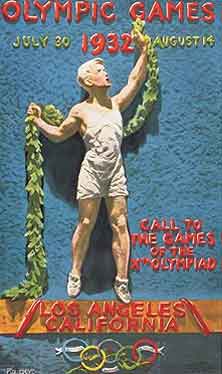
1932 Summer Olympics Los Angeles: X Olympiad
The
1932 Games were held in the middle of the Great Depression. No country
bid to host the Games but they were awarded to the runners up to
Amsterdam the city of Los Angeles. Because of the economic situation
many nations who had attended in 1928 cound not afford to send teams or
as many competitors in 1932 reflected in the stats below.
Nations 37 (-9)
Competitors 1332 (-1551)
Sports 14 (-1)
Events 117 (+12)
Despite the reduction in nations there were two debutante nations Columbia and China. The most populous nation in the world made their Olympic debut with just one athlete Liu Changchun in the 100m and 200m on the track. He came last in both his heats and failed to progress.
There was an innovation in the 1932 Games that seems almost like one of those how did they survive before moments to us today. There was the introduction of the medal podium (seen here with the women's hurdles medalists) as you can see in the picture it was very roughly finished and you can see the individual planks of wood and indeed the grain of the wood that make it up.
The Los Angeles Memorial Stadium had been in existence since 1923 but was renamed the Olympic Stadium during 1932. Although not built specifically for the Olympics it is the only stadium to have hosted the Olympics twice. It is also the only Olympic Stadium that has also hosted World Series Finals and the Superbowl, fittingly American Football was a demonstration sport.
10th Street through the city was renamed Olympic Boulevard in honour of the Tenth Games a name it still bears today.
Female champion who took on the men
One of the darlings of the games was Babe Didrikson who took gold in the 80m hurdles (see above) and the javelin. She had also tied with a world record leap of compatriot Jean Shiley in the High Jump but in the jump off for gold her technique was deemed illegal those denying her triple gold. In the year prior to the Olympics she had led a team to victory in the Amateur Athletic Union Basketball tournament.
However, it was post the Games that she found her true sport. In 1935 she took up golf but was very soon denied amateur status. So in 1938 she competed in the Los Angeles Open and men's PGA event. Something that no other woman would attempt to emulate for over 60 years. In 1945 she took part in three PGA tournaments against the men and made the cut in all three (a feat that no other woman has achieved). In 1948, after competing successfully for many years on the LPGA she attempted to qualify for the US Open but was rejected by the USGA who said that the tournament was only for men. She was an Olympian who went on to be one of the champions for women's sport by taking on the men at their own game in their events.
There's something about Stella
The winner of the womens 100m was Stanisława Walasiewicz of Polan had a different impact on gender sports. Prior to the games she had been running the USA under the name Stella Walsh but just two days before she was meant to take her Oath of Citizenship she decided against it so she could compete for her native Poland in the Games. Upon her death in 1980, long after she won the gold in 100m and narrowly failed to retain it in 1936 she was found to have ambiguous genetalia that meant she could not be identified as either biologically male or female. Detailed investigations also show that she possessed both and XX (female) and an XY (male) pair of chromosones. She is thus the first intersex Olympic winner, though some controversy still remains as to whether her achievements and records should be expunged from the records.
Olympians to losses of war
Last week I mentioned some of the Dutch and Hungarian champions who were to lose their lives in the war that was to come. In 1932 there were others. One was the winner of the Individual Show Jumping and he would fall in one of the iconic battles of the Pacific campaign at Iwo Jima. His name was Takeichi Nishi a first lieutenant in the Japanese Army.
In 1930 he found what was to be his favourite horse in Italy, the army wouldn't pay for it so Uranus was bought from his own personal funds. They showed together around the European circuit before heading to the Olympics in 1932. It has been Japan's only equestrian medal to date.
He also competed in 1936 in Berlin but fell from Uranus mid round, before returning to military service in a Japanese army that was cutting back on cavalry and heading into tanks. It was while he was in command of the 26th Tank Regiment under the Ogasawara Corps that he was died on the 21 March 1945. Though the American's appealed for him to surrender as the world could not face losing Baron Nishi (the title coming through his father) the showjumper, appeals he with Japanese determination refused to respond to.
Endre Kabos was another Jewish Hungarian Sabre fencer who took gold in the 1932 Team event, and repeated that along with the individual gold in 1936. He underwent five months in a forced labour camp under the Nazis before escaping and joining the Hungarian underground. he is believed to have been defending the Magrit Bridge in November 1944 when he died.
Still with fencing Poland won only one bronze medal at these Olympics in the team Foil. Many of that team fought in the Polish army, all but one survived. The fallen was Leszek Władysław Lubicz-Nycz who had served in the Polish army since 1918, but on 22 Spetember 1939 was killed in Action near Warsaw during the September Campaign, as Germany invaded Poland. He was therefore one of the victims of World War II in its opening month.
See also: my full list of posts about past Olympics
Nations 37 (-9)
Competitors 1332 (-1551)
Sports 14 (-1)
Events 117 (+12)
Despite the reduction in nations there were two debutante nations Columbia and China. The most populous nation in the world made their Olympic debut with just one athlete Liu Changchun in the 100m and 200m on the track. He came last in both his heats and failed to progress.
There was an innovation in the 1932 Games that seems almost like one of those how did they survive before moments to us today. There was the introduction of the medal podium (seen here with the women's hurdles medalists) as you can see in the picture it was very roughly finished and you can see the individual planks of wood and indeed the grain of the wood that make it up.
The Los Angeles Memorial Stadium had been in existence since 1923 but was renamed the Olympic Stadium during 1932. Although not built specifically for the Olympics it is the only stadium to have hosted the Olympics twice. It is also the only Olympic Stadium that has also hosted World Series Finals and the Superbowl, fittingly American Football was a demonstration sport.
10th Street through the city was renamed Olympic Boulevard in honour of the Tenth Games a name it still bears today.
Female champion who took on the men
One of the darlings of the games was Babe Didrikson who took gold in the 80m hurdles (see above) and the javelin. She had also tied with a world record leap of compatriot Jean Shiley in the High Jump but in the jump off for gold her technique was deemed illegal those denying her triple gold. In the year prior to the Olympics she had led a team to victory in the Amateur Athletic Union Basketball tournament.
However, it was post the Games that she found her true sport. In 1935 she took up golf but was very soon denied amateur status. So in 1938 she competed in the Los Angeles Open and men's PGA event. Something that no other woman would attempt to emulate for over 60 years. In 1945 she took part in three PGA tournaments against the men and made the cut in all three (a feat that no other woman has achieved). In 1948, after competing successfully for many years on the LPGA she attempted to qualify for the US Open but was rejected by the USGA who said that the tournament was only for men. She was an Olympian who went on to be one of the champions for women's sport by taking on the men at their own game in their events.
There's something about Stella
The winner of the womens 100m was Stanisława Walasiewicz of Polan had a different impact on gender sports. Prior to the games she had been running the USA under the name Stella Walsh but just two days before she was meant to take her Oath of Citizenship she decided against it so she could compete for her native Poland in the Games. Upon her death in 1980, long after she won the gold in 100m and narrowly failed to retain it in 1936 she was found to have ambiguous genetalia that meant she could not be identified as either biologically male or female. Detailed investigations also show that she possessed both and XX (female) and an XY (male) pair of chromosones. She is thus the first intersex Olympic winner, though some controversy still remains as to whether her achievements and records should be expunged from the records.
Olympians to losses of war
Last week I mentioned some of the Dutch and Hungarian champions who were to lose their lives in the war that was to come. In 1932 there were others. One was the winner of the Individual Show Jumping and he would fall in one of the iconic battles of the Pacific campaign at Iwo Jima. His name was Takeichi Nishi a first lieutenant in the Japanese Army.
In 1930 he found what was to be his favourite horse in Italy, the army wouldn't pay for it so Uranus was bought from his own personal funds. They showed together around the European circuit before heading to the Olympics in 1932. It has been Japan's only equestrian medal to date.
He also competed in 1936 in Berlin but fell from Uranus mid round, before returning to military service in a Japanese army that was cutting back on cavalry and heading into tanks. It was while he was in command of the 26th Tank Regiment under the Ogasawara Corps that he was died on the 21 March 1945. Though the American's appealed for him to surrender as the world could not face losing Baron Nishi (the title coming through his father) the showjumper, appeals he with Japanese determination refused to respond to.
Endre Kabos was another Jewish Hungarian Sabre fencer who took gold in the 1932 Team event, and repeated that along with the individual gold in 1936. He underwent five months in a forced labour camp under the Nazis before escaping and joining the Hungarian underground. he is believed to have been defending the Magrit Bridge in November 1944 when he died.
Still with fencing Poland won only one bronze medal at these Olympics in the team Foil. Many of that team fought in the Polish army, all but one survived. The fallen was Leszek Władysław Lubicz-Nycz who had served in the Polish army since 1918, but on 22 Spetember 1939 was killed in Action near Warsaw during the September Campaign, as Germany invaded Poland. He was therefore one of the victims of World War II in its opening month.
See also: my full list of posts about past Olympics
9 March 2012
1928 Summer Olympics Amsterdam: IX Olympiad
Nations 46 (+2)
Competitors 2883 (-206)
Sports 15 (-2)
Events 109 (-15)
28 July to 12 August 1928 hosted by Amsterdam, Netherlands
The Official poster for the Games (right) was designed by Jos Rivers, only 10,000 were made. However, the IOC failed to gain the copyright of this image and therefore ever since in their publications used a different poster (see below) that was first used in a German book about the games.
Since then the IOC have been more careful about the images and copyrights of their Games. As now the financial outcome of the Games were becoming important. As monitored by Los Angeles who had lost out to Amsterdam for 1928 but had secured the Games for 1932, there was US$183 million with receipts of US$1.165 million for a loss of US$18,000.
New in 1928
For the first time in the modern Olympics a flame was lit over the stadium for the duration of the Games, although the torch relay was still 8 years off.
The games themselves took on a 16 day programme of events rather than being spread out as previous games had been. This programme is largely the same as the one used today, with swimming dominating the first week and athletics the second with the other sports and new sports fitting into the 16 day schedule.
It was also the first time that the flag of Greece, followed by its team preceded all the competitors in the parade at the opening ceremony, noting the gratitude that Greece were was being the inspiration
New Olympic nations taking part for the first time in Amsterdam were Malta, Panama and Rhodesia (modern day Zimbabwe). Also after a 16 year absence Germany were welcomed back into the Olympic fold.
Seeing as yesterday was International Women's Day it is worth pointing out that Athletics and Gymnastics were finally opened up to female Olympians.
The women track and field events were limited to:
See also: my full list of past Olympics
Competitors 2883 (-206)
Sports 15 (-2)
Events 109 (-15)
28 July to 12 August 1928 hosted by Amsterdam, Netherlands
The Official poster for the Games (right) was designed by Jos Rivers, only 10,000 were made. However, the IOC failed to gain the copyright of this image and therefore ever since in their publications used a different poster (see below) that was first used in a German book about the games.
Since then the IOC have been more careful about the images and copyrights of their Games. As now the financial outcome of the Games were becoming important. As monitored by Los Angeles who had lost out to Amsterdam for 1928 but had secured the Games for 1932, there was US$183 million with receipts of US$1.165 million for a loss of US$18,000.
New in 1928
For the first time in the modern Olympics a flame was lit over the stadium for the duration of the Games, although the torch relay was still 8 years off.
The games themselves took on a 16 day programme of events rather than being spread out as previous games had been. This programme is largely the same as the one used today, with swimming dominating the first week and athletics the second with the other sports and new sports fitting into the 16 day schedule.
It was also the first time that the flag of Greece, followed by its team preceded all the competitors in the parade at the opening ceremony, noting the gratitude that Greece were was being the inspiration
New Olympic nations taking part for the first time in Amsterdam were Malta, Panama and Rhodesia (modern day Zimbabwe). Also after a 16 year absence Germany were welcomed back into the Olympic fold.
Seeing as yesterday was International Women's Day it is worth pointing out that Athletics and Gymnastics were finally opened up to female Olympians.
| Halina Konapacka first women's athletics gold medalist |
- 100m (winner Betty Robinson USA)
- 800m (Lina Radke GER)
- 4x100m (Canada inc. silver and bronze 100m athletes)
- High Jump (Ethel Catherwood CAN)
- Discus throw (Halina Konapacka POL)
However, when several of the women in the 800m finished
exhausted no running events of longer than 200m were to be run by women
until the 1960 Games.
It was Halina Konapacka who would go into the history books as the as the first women's champion in athletics with a throw of 39.62 which beat her own world record before the games of 39.18. This was a whole 2.54m further than the silver medal athlete, Lillian Copeland of the USA, who would take both the gold and a new Olympic record four years later.
In
the gymnastics the women were limited to an all around team event that
was won by the Netherlands. Five of the 12 woman team were Jewish, four
of whom Estella Agsteribbe, Anna Dresden-Polak, Judikje Simons and
Helena Nordheim were killed in concentration camps during World War II.
Agsteribbe at Auschwitz, the other three at Sobibór. Only Elka de Levie
of the Jewish gymnasts in the team survived the war, though her marriage
didn't.
Sadly they weren't to
the the only Olympic team gold medalists from Amsterdam who would be
killed by the Nazis in the war to come. The Hungarian sabre team lost
János Garay, Attila Petschauer, who took gold in the saber (along with
1908 and 1912 sabre champion fellow Hungarian Oskar Gerde).
One of the great Olympic dynasties in team sport won their first gold in 1928. They dominated the tournament scoring 26 goals in their group with none against. Adding a 3-0 win in the final. Richard Allen pictured in his goal keeping leg defenders would concede one goal at the 1932 Games when he was off signing autographs in the games against the USA team, India did win 24-1 though. The following Olympics one further goal was scored against him, this is still a record of best performance by a goal keeper in Olympic history.
India would go on to win 6 consecutive gold medals in the field hockey but even in 1928 in the days of Empire they had a mixed racial team. Along with Allen, were Maurice Gateley, William Goodsir-Cullen, Leslie Hammond, George Marthins, Rex Norris, Michael Rocque and Frederic Seaman of European descent there was Dhyan Chand, Feroze Khan, Broome Pinneger, Ali Shaukat, Jaipal Singh, Sayed Yusuf and Kher Singh Gill from a variety of native races.
The other sporting dynasty that was to immerge to
almost claim an event as its own was Hungary in the water polo. They
only secured Silver in the Amsterdam pool, but there were to medal in
ever Olympics water polo tournament from then until 1980, securing six
golds, three silver and three bronze in the process.
Since 2000 there has been a revival in Hungarian water polo fortunes and they have secured the last three gold medals as well.
One of the great Olympic dynasties in team sport won their first gold in 1928. They dominated the tournament scoring 26 goals in their group with none against. Adding a 3-0 win in the final. Richard Allen pictured in his goal keeping leg defenders would concede one goal at the 1932 Games when he was off signing autographs in the games against the USA team, India did win 24-1 though. The following Olympics one further goal was scored against him, this is still a record of best performance by a goal keeper in Olympic history.
India would go on to win 6 consecutive gold medals in the field hockey but even in 1928 in the days of Empire they had a mixed racial team. Along with Allen, were Maurice Gateley, William Goodsir-Cullen, Leslie Hammond, George Marthins, Rex Norris, Michael Rocque and Frederic Seaman of European descent there was Dhyan Chand, Feroze Khan, Broome Pinneger, Ali Shaukat, Jaipal Singh, Sayed Yusuf and Kher Singh Gill from a variety of native races.
![]() |
| 1928 water polo final Germany v Hungary |
Since 2000 there has been a revival in Hungarian water polo fortunes and they have secured the last three gold medals as well.
See also: my full list of past Olympics
2 March 2012
1924 Summer Olympics Paris: VIII Olympiad
Nations 44 (+15)
Competitors 3089 (+462)
Sports 17 (-5)
Events 126 (-28)
4 May - 27 July hosted by Paris, France
These were the final games to he held under the IOC Presidency of Baron Pierre de Coubertin how having held the role for 29 years stepped aside the year after the second games to come to his home city.
There were also the second Olympic Games to be held in France that year, the inaugural Winter Olympics had finished in the Alpine resort of Chamonix just 3 months before the opening of the Summer Games. There were officially at the time just a winter week of the Summer Olympiad though when a second week of winter sports became part of the programme in 1928 they were to be recognised as the first Winter Olympics. But the Winter Games are a different story and one I may tell in the lead up to Sochi and the XXII Winter Olympiad in February 2014.
This is Paris in the Summer of 1924, the Olympics of Chariots of Fire.
Citius, Altius, Fortius
The motto translated as "Faster, Higher, Stronger" was first used in the 1924 Games. It had previously been used by a French sporting Federation one of whose members was Baron Pierre de Coubertin. It exemplifies the major aspects of most of the sports still in Olympics movement. Archery and Shooting present then and from the start not really fitting any of the three, but how does one add most accurate.
Olympic Village
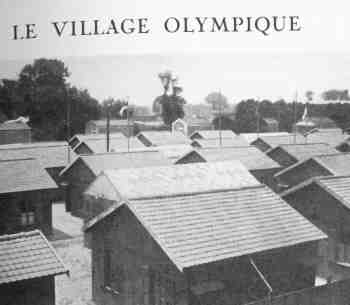
The Games were now increasing to involve over 3,000 athletes never mind the officials and team coaches etc for them all. In past Games Olympians had had to book space in hotels along with anyone else who wanted to be at the Games. But in 1924 a new innovation came to the Olympics a specific village of accommodation to house the athletes and officials.
As you can see from the picture the accommodation then was rather basic looking cabins. But there were built close to the stadium and were the first to be termed Olympic Village. It wasn't replicated in 1928 but has been at every Games since 1932.
New Nations
The newly independent Ireland were amongst the new teams taking part. So the taking part under protest and protests of the previous three Olympiads were now a thing of the past. They were not to medal in their debut, having had 'Irish' medalists in the past the closest they came to a medal was in the boxing, the event that they still have over half their medals in.
It was in the Semi Final of the Welterwight contest that the Referee Stopped the Contest to protest the Irish boxer Patrick Dwyer from the Argentine Hector Mendez, but he was unable to take to the ring the following day for the Bronze medal match which went to Douglas Lewis from Canada on a walk over.
Also present for the first time were Ecuador, Haiti, Lithuania, Philippines, Mexico and Uruguay. Latvia and Poland had both made their debuts at Chamonix in the Winter Games and sent teams to the summer as well. Poland would take a silver in the men's team pursuit cycling and a bronze in the individual show jumping, and Haiti would take bronze in the team rifle shooting.
Sports some goodbyes, some familiarity and some champions
Rugby made its last appearance in the Olympics as a full 15 a side event. It will be returning in Rio 2016 as a Sevens event. Polo was also making one of its occasional visits to the game, its fourth out of five. Tennis was also to make its last appearance from the early Games roster until it returned as a full Olympic sport in 1988.
However, there was standardisation of two disciplines. From this games onwards the length of the Marathon was set to the 26 miles 385 years that first was run at the 1908 Games in London. Also the Olympic measurements for a swimming pools were set to the now familiar 50m. In the past swimming had taken place in pools of whatever length was available or in open water in lakes or the sea.
Of course because of Chariots of Fire everyone
knows that Harold Abrams won the 100m and Eric Liddell won the 400m.
But did you know that they both contested one final together. In the
200m both qualified along with 4 Americans Jackson Scholz and Charles
Paddock who were also featured in the film as losers to Abrams took gold
and silver. But it was Liddell in bronze with Abrams behind in 6th. All
three of the sprint disciplines were won in Olympic Records, Liddell's
being a world record and Abrams running equal to the existing Olympic
record of 10.6 secs in his QF, SF and Final.
But aside from the sprint guys who made the story of the Oscar winning film who else did well in Paris.
Well talking of films there was a future star fo screen and jungle doing rather well in that 50m pool. He took gold in both the 100m and 400m Freestyle as well as helping the USA to 4x200m freestyle gold. He would take a further two golds four years later but he also appeared in the USA water polo team which took the bronze medal. Eight years later and of course the sound of Johnny Weissmuller's Tarzan yell would first be heard on the silver screen. But then he was just a 20 year old American swimmer burn in what was at the time the Austria-Hungary Empire in what is now Romania in the town of Timişoara famous for being the seed bed of that countries revolution.
In the fencing there was a Frenchman, Roger Ducret, competing in his second Games. Having won bronze in the individual foil he went on to gold in his home games, adding to it the team foil and épée golds as well as silvers in the individual épée and sabre. He wasn't on the roster for the French team in the sabre the only men's event that the hosts failed to medal at in the fencing.
See also: My full list of past Olympics
Competitors 3089 (+462)
Sports 17 (-5)
Events 126 (-28)
4 May - 27 July hosted by Paris, France
These were the final games to he held under the IOC Presidency of Baron Pierre de Coubertin how having held the role for 29 years stepped aside the year after the second games to come to his home city.
There were also the second Olympic Games to be held in France that year, the inaugural Winter Olympics had finished in the Alpine resort of Chamonix just 3 months before the opening of the Summer Games. There were officially at the time just a winter week of the Summer Olympiad though when a second week of winter sports became part of the programme in 1928 they were to be recognised as the first Winter Olympics. But the Winter Games are a different story and one I may tell in the lead up to Sochi and the XXII Winter Olympiad in February 2014.
This is Paris in the Summer of 1924, the Olympics of Chariots of Fire.
Citius, Altius, Fortius
The motto translated as "Faster, Higher, Stronger" was first used in the 1924 Games. It had previously been used by a French sporting Federation one of whose members was Baron Pierre de Coubertin. It exemplifies the major aspects of most of the sports still in Olympics movement. Archery and Shooting present then and from the start not really fitting any of the three, but how does one add most accurate.
Olympic Village
The Games were now increasing to involve over 3,000 athletes never mind the officials and team coaches etc for them all. In past Games Olympians had had to book space in hotels along with anyone else who wanted to be at the Games. But in 1924 a new innovation came to the Olympics a specific village of accommodation to house the athletes and officials.
As you can see from the picture the accommodation then was rather basic looking cabins. But there were built close to the stadium and were the first to be termed Olympic Village. It wasn't replicated in 1928 but has been at every Games since 1932.
New Nations
The newly independent Ireland were amongst the new teams taking part. So the taking part under protest and protests of the previous three Olympiads were now a thing of the past. They were not to medal in their debut, having had 'Irish' medalists in the past the closest they came to a medal was in the boxing, the event that they still have over half their medals in.
It was in the Semi Final of the Welterwight contest that the Referee Stopped the Contest to protest the Irish boxer Patrick Dwyer from the Argentine Hector Mendez, but he was unable to take to the ring the following day for the Bronze medal match which went to Douglas Lewis from Canada on a walk over.
Also present for the first time were Ecuador, Haiti, Lithuania, Philippines, Mexico and Uruguay. Latvia and Poland had both made their debuts at Chamonix in the Winter Games and sent teams to the summer as well. Poland would take a silver in the men's team pursuit cycling and a bronze in the individual show jumping, and Haiti would take bronze in the team rifle shooting.
Sports some goodbyes, some familiarity and some champions
Rugby made its last appearance in the Olympics as a full 15 a side event. It will be returning in Rio 2016 as a Sevens event. Polo was also making one of its occasional visits to the game, its fourth out of five. Tennis was also to make its last appearance from the early Games roster until it returned as a full Olympic sport in 1988.
However, there was standardisation of two disciplines. From this games onwards the length of the Marathon was set to the 26 miles 385 years that first was run at the 1908 Games in London. Also the Olympic measurements for a swimming pools were set to the now familiar 50m. In the past swimming had taken place in pools of whatever length was available or in open water in lakes or the sea.
| Liddell being carried aloft |
But aside from the sprint guys who made the story of the Oscar winning film who else did well in Paris.
Well talking of films there was a future star fo screen and jungle doing rather well in that 50m pool. He took gold in both the 100m and 400m Freestyle as well as helping the USA to 4x200m freestyle gold. He would take a further two golds four years later but he also appeared in the USA water polo team which took the bronze medal. Eight years later and of course the sound of Johnny Weissmuller's Tarzan yell would first be heard on the silver screen. But then he was just a 20 year old American swimmer burn in what was at the time the Austria-Hungary Empire in what is now Romania in the town of Timişoara famous for being the seed bed of that countries revolution.
In the fencing there was a Frenchman, Roger Ducret, competing in his second Games. Having won bronze in the individual foil he went on to gold in his home games, adding to it the team foil and épée golds as well as silvers in the individual épée and sabre. He wasn't on the roster for the French team in the sabre the only men's event that the hosts failed to medal at in the fencing.
See also: My full list of past Olympics
24 February 2012
1920 Summer Olympics Antwerp: VII Olympiad
"Hang on!" you say, "Last week it was the V Olympiad. I know my Roman numerals what happened to the VI Olympiad?"
Ok, here is what happened, the games of the VI Olympiad had been awarded. In 1912 work on the Olympic Stadium designed to seat 18,000 spectators began. On 8 June 1913 it was dedicated (pictured) with 60,000 people in attendance and 10,000 pigeons released. The issue of course was timing and location. The games of course would have occurred in 1916 in the middle of World War I, the location as shown by the flag of the German Empire was to have been Berlin.
There the games of the VI Olympiad never took place and it was 20 years before Berlin got to host their games. The Deutches Stadion built for the 1916 bid was used for football matches but was closed in 1934 with the arrival of the Olympic Stadium.
Budapest had initially been chosen to host the 1920 Games over Amsterdam and Lyon, however as they were part of the German Allies the Austro-Hungarian Empire they were not suitable to host the subsequent games. Therefore it fell upon the Belgian city of Antwerp to help that nation and the world recover from the trench warfare that had ravished that land.
So on with the stats
Nations 29 (+1)
Competitors 2627 (220)
Sports 22 (+8)
Events 154 (+52)
20 April - 12 September 1920 hosted by Antwerp, Belgium
The IOC left which countries should be invited up to the hosts, therefore the athletes of the former Axis powers Germany, Austria, Hungary, Bulgaria and Turkey were not invited.
The redrawn map of Europe did have the opportunity for new nations to join the Olympic family in Antwerp. But only Estonia took on that mantle for Europe. Czechoslovakia took on the mantle of Bohemia who had competed pre-war. Also from Europe the Kingdom of Serbs, Croats and Slovenes (later to be known as Yugoslavia) and Monaco took part for the first time, as did the newly independent Finland who had taken part as the Russian Grand Duchy of Finland before. Brazil and Argentina were also new countries, and having competed as Australasia, New Zealand competed for the first time as as a separate entity.
Post War a new flag
In June 1914 at the IOC congress Baron Pierre de Coubertin had approval for him emblem of five interlocking rings as the official symbol of the Olympic Games. With the intervention of war it appeared for the first time in Antwerp on a white back ground to represent peace.
In 1931 de Coubertin said:
The original flag as pictured, went missing after the games and a new flag was used from the next Games and passed on to the next Summer Games Host until 1988 (when it was retired), but also up until the 1952 Winter Games before they winter Olympiads got their own flag to pass on. However, for the entire use of that 1924 flag being used it was known as the "Antwerp Flag" in honour of its first appearance.
...and a new Oath
The Olympic Oath was first muted in 1906 but didn't appear in the opening ceremony until swimmer, water polo player and Epée Fencer Victor Boin uttered the following words.
Boin should really be in that infamous list of ten famous Belgians, but rarely do people remember who took the oath on behalf of the athletes, from 1972 also the officials.
However, Boin won three medals across three Olympiad in two sports from 1908 to 1920. Silver then Bronze in the water polo, followed by a silver in the team epée in 1920.
New sports
Ice Hockey was the only new sport at the 1920 Games and along with Ice Skating which had returned from the London 1908 were a precursor to the new innovation that would happen four years later in Chamonix, France with the I Winter Olympiad.
The eventual winners were Canada (pictured) in the shape of the Winnepeg Falcons. The team included future Stanley Cup winners Frank Frederickson and Haldor Halderson. Seven of the eight man team were of Icelandic origin, as well as Frederickson and Halderson, Robert Benson, Walter Byron, Chris Fridfinnson, Magnus Goodman and Konrad Johanneson had some or total Icelandic ancestors. Only Alan Woodman and coach W.A. Hewitt were except from the viking blood.
The team they beat in the final were USA.
The flying Finn
A 23 year old from Turku in Finland was to start what was to be the most successful Olypic career of a distance runner. He still ties the most Olympic gold medals with a sprinter Carl Lewis, gymnast Larisa Latynina and swimmer Mark Spitz only Michael Phelps has won more.
In 1920 Paavo Nurmi took three gold medals in the 10,000m, Individual Cross-Country and Team Cross-Country. He was also to take silver in the 500om.
In 1924 he went on to take 5 golds 1500m, 5000m, 3000m team race, individual and team cross country. He also came first in both the semi-final and final races in the 3000m team race, as well as his semi-finals in both the 1500m and 5000m, meaning he ran seven races, for a total of 26,000m, and won them all. He had also been entered in the 10,000m but the Finnish delegation fearing for his health withdrew him from what would have been his last race of the Olympics for a possible 6th gold. He returned to Finland angry and 56 days after the Olympic 10,000m winner, his compatriot, Ville Ritola ran a new world record to win gold he smashed it by a further 17 seconds.
He followed that up with another gold in the 10,000m with silvers in the 5000m and 3000m steeplechase in 1928. He would have been going for a 3rd 10,000m gold and the Marathon in 1932 but for a challenge from the Swedes that he had been paid too much in expenses to race in Germany and therefore broke the amateur rules.
An event in two countries and a first medal on ***** soil
For a unique Olympic moment we turn to the 12-foot dinghy competition. The second race was nullified at Ostend due to a tidal current moving the marks. There wasn't time to reschedule the race, but as both the contesting boats were from the Netherlands the final race took place in Amsterdam. The only time an Olympic event took place in more than one country and the first Olympic competition held by the Dutch a whole 8 years before their own Olympics.
See also: my full list of past Olympicss
Ok, here is what happened, the games of the VI Olympiad had been awarded. In 1912 work on the Olympic Stadium designed to seat 18,000 spectators began. On 8 June 1913 it was dedicated (pictured) with 60,000 people in attendance and 10,000 pigeons released. The issue of course was timing and location. The games of course would have occurred in 1916 in the middle of World War I, the location as shown by the flag of the German Empire was to have been Berlin.
There the games of the VI Olympiad never took place and it was 20 years before Berlin got to host their games. The Deutches Stadion built for the 1916 bid was used for football matches but was closed in 1934 with the arrival of the Olympic Stadium.
Budapest had initially been chosen to host the 1920 Games over Amsterdam and Lyon, however as they were part of the German Allies the Austro-Hungarian Empire they were not suitable to host the subsequent games. Therefore it fell upon the Belgian city of Antwerp to help that nation and the world recover from the trench warfare that had ravished that land.
So on with the stats
Nations 29 (+1)
Competitors 2627 (220)
Sports 22 (+8)
Events 154 (+52)
20 April - 12 September 1920 hosted by Antwerp, Belgium
The IOC left which countries should be invited up to the hosts, therefore the athletes of the former Axis powers Germany, Austria, Hungary, Bulgaria and Turkey were not invited.
The redrawn map of Europe did have the opportunity for new nations to join the Olympic family in Antwerp. But only Estonia took on that mantle for Europe. Czechoslovakia took on the mantle of Bohemia who had competed pre-war. Also from Europe the Kingdom of Serbs, Croats and Slovenes (later to be known as Yugoslavia) and Monaco took part for the first time, as did the newly independent Finland who had taken part as the Russian Grand Duchy of Finland before. Brazil and Argentina were also new countries, and having competed as Australasia, New Zealand competed for the first time as as a separate entity.
Post War a new flag
In June 1914 at the IOC congress Baron Pierre de Coubertin had approval for him emblem of five interlocking rings as the official symbol of the Olympic Games. With the intervention of war it appeared for the first time in Antwerp on a white back ground to represent peace.
In 1931 de Coubertin said:
"The Olympic flag ... has a white background, with five interlaced rings in the centre: blue, yellow, black, green and red ... This design is symbolic ; it represents the five inhabited continents of the world, united by Olympism, while the six colors are those that appear on all the national flags of the world at the present time."
The original flag as pictured, went missing after the games and a new flag was used from the next Games and passed on to the next Summer Games Host until 1988 (when it was retired), but also up until the 1952 Winter Games before they winter Olympiads got their own flag to pass on. However, for the entire use of that 1924 flag being used it was known as the "Antwerp Flag" in honour of its first appearance.
...and a new Oath
The Olympic Oath was first muted in 1906 but didn't appear in the opening ceremony until swimmer, water polo player and Epée Fencer Victor Boin uttered the following words.
We swear. We will take part in the Olympic Games in a spirit of chivalry, for the honour of our country and for the glory of sport.
Boin should really be in that infamous list of ten famous Belgians, but rarely do people remember who took the oath on behalf of the athletes, from 1972 also the officials.
However, Boin won three medals across three Olympiad in two sports from 1908 to 1920. Silver then Bronze in the water polo, followed by a silver in the team epée in 1920.
New sports
Ice Hockey was the only new sport at the 1920 Games and along with Ice Skating which had returned from the London 1908 were a precursor to the new innovation that would happen four years later in Chamonix, France with the I Winter Olympiad.
The eventual winners were Canada (pictured) in the shape of the Winnepeg Falcons. The team included future Stanley Cup winners Frank Frederickson and Haldor Halderson. Seven of the eight man team were of Icelandic origin, as well as Frederickson and Halderson, Robert Benson, Walter Byron, Chris Fridfinnson, Magnus Goodman and Konrad Johanneson had some or total Icelandic ancestors. Only Alan Woodman and coach W.A. Hewitt were except from the viking blood.
The team they beat in the final were USA.
The flying Finn
A 23 year old from Turku in Finland was to start what was to be the most successful Olypic career of a distance runner. He still ties the most Olympic gold medals with a sprinter Carl Lewis, gymnast Larisa Latynina and swimmer Mark Spitz only Michael Phelps has won more.
In 1920 Paavo Nurmi took three gold medals in the 10,000m, Individual Cross-Country and Team Cross-Country. He was also to take silver in the 500om.
In 1924 he went on to take 5 golds 1500m, 5000m, 3000m team race, individual and team cross country. He also came first in both the semi-final and final races in the 3000m team race, as well as his semi-finals in both the 1500m and 5000m, meaning he ran seven races, for a total of 26,000m, and won them all. He had also been entered in the 10,000m but the Finnish delegation fearing for his health withdrew him from what would have been his last race of the Olympics for a possible 6th gold. He returned to Finland angry and 56 days after the Olympic 10,000m winner, his compatriot, Ville Ritola ran a new world record to win gold he smashed it by a further 17 seconds.
He followed that up with another gold in the 10,000m with silvers in the 5000m and 3000m steeplechase in 1928. He would have been going for a 3rd 10,000m gold and the Marathon in 1932 but for a challenge from the Swedes that he had been paid too much in expenses to race in Germany and therefore broke the amateur rules.
An event in two countries and a first medal on ***** soil
For a unique Olympic moment we turn to the 12-foot dinghy competition. The second race was nullified at Ostend due to a tidal current moving the marks. There wasn't time to reschedule the race, but as both the contesting boats were from the Netherlands the final race took place in Amsterdam. The only time an Olympic event took place in more than one country and the first Olympic competition held by the Dutch a whole 8 years before their own Olympics.
See also: my full list of past Olympicss
Subscribe to:
Posts (Atom)